/ 01
Discovery & Mapping
We inventory every system, API, and data flow across your agency and partner jurisdictions — documenting where information originates, where it dies, and who relies on it downstream.
When enterprise platforms fracture, local data pipelines, local agencies, and public safety officers bear the risk. DCM Innovative Technologies specializes in Justice Lifecycle Data Architecture — we audit, repair, and optimize integration pipelines between state-managed databases and local municipal systems to eliminate information asymmetry, restore referential integrity, and protect operational outcomes.
Closing patrol-to-prosecution data gaps, repairing fractured CAD/RMS integrations, and enabling cross-jurisdictional information sharing.
Modernizing case management, aligning e-filing interoperability, and engineering defensible digital evidence lifecycles.
Replacing legacy infrastructure, de-risking technology deployments, and standing up CJIS-compliant, audit-ready systems.
Rapid migrations to unified cloud environments routinely trigger data severance during the Extract, Transform, Load (ETL) process. APIs time out, payloads drop, and critical records detach from their case files — producing delayed updates, active “ghost” warrants, and immense legal liability for the local jurisdictions left holding the bag. DCM bypasses the convenient “human error” narrative and performs forensic diagnostics on the integration layer itself — measuring pipeline handoff latencies and auditing primary-key validation so stakeholders can separate systemic architectural flaws from local workflow behavior, and enforce vendor accountability with evidence.
Before we build anything, we diagnose exactly where your systems fail to connect, why data stops moving, and what it will take to restore a clean, defensible flow across every jurisdiction and platform you depend on.
We inventory every system, API, and data flow across your agency and partner jurisdictions — documenting where information originates, where it dies, and who relies on it downstream.
We identify where data stops flowing cleanly — schema mismatches, missing data contracts, broken handoffs between CAD and RMS, and duplicate records that corrupt the chain of custody.
You receive a prioritized, actionable roadmap with specific technical fixes, data standards (NIEM, GJXDM), API gateway designs, and governance protocols to close each gap.
Every remediation plan includes acceptance criteria, test scenarios, and a rollout sequence that keeps your existing operations stable while new integrations come online.
Every incident is a single evidentiary thread. We architect the data layer that captures it cleanly at origination, transforms and persists it with integrity, and hands it to prosecutors as a court-ready record — with quality controls running across every stage in between.
Call metadata, geolocation, and dispatch events captured as structured, schema-validated records at the moment of origination.
Why it matters
Accurate caller location, hazards, and prior-incident flags reach responding officers before they arrive on scene.
Officer narratives, incident reports, and evidence tags ingested with consistent identifiers so people, places, and property resolve cleanly downstream.
Why it matters
Consistent identifiers make warrant and criminal-history lookups reliable during stops — fewer mistaken identities, safer contacts.
Complaints extracted from RMS, web intake, and partner agencies, transformed to NIEM / GJXDM, and loaded into the case-of-record system with full lineage.
Why it matters
Normalized, deduplicated subjects and addresses produce warrant packages that hold up at service — and prevent wrong-address executions.
Authoritative storage with versioning, audit trails, and CJIS-aligned retention so every change is traceable and defensible.
Why it matters
Tamper-evident records keep active warrants current and defensible, so officers act on facts the court will uphold.
Court-ready discovery packages with verified completeness, chain of custody intact, and entity resolution matching DA case-management systems.
Why it matters
Complete, verified packages mean charges stick, warrants get signed faster, and officers spend less time re-litigating paperwork in court.
Schema enforcement, required-field checks, and reference-data lookups the moment a record is created — not days later in a report.
Deterministic and probabilistic matching so one person, vehicle, or address is one record across every system that touches the case.
Every transformation logged, every field traceable back to its 911 origin — defensible in discovery, auditable on demand.
A survivor-led audit of a cross-jurisdictional domestic violence corridor mapped the exact data fractures behind facilitated evasion — from the first 911 call through prosecution.
Read the full audit narrativeVerbal LAP scores are never persisted as data — future responders arrive blind to known escalation risk.
DVPO findings of fact (“weapon involved”) stay stranded in the civil file, invisible to the criminal warrant package.
Outstanding warrants in one county are invisible to a neighboring county’s booking desk because the systems don’t communicate.
We operationalize the LAP score captured at initial response — persisting it as a structured data point that travels with the case, not a verbal note that dies on scene.
This is the technical foundation of Domestic Disturbance Repeat Incident (DDRI) tracking — and it lifts the burden of re-telling off the victim.
Holistic understanding of fact within a single source of truth ensures the first 911 call a victim makes is actually a system-supported path to safety.
Outcome — The Master Case Packet (MCP) becomes the primary key fusing CAD, RMS, eCourts, and DVPO records into Connected Case Intelligence — restoring offender accountability and victim protection.
Forensic diagnostics on the data integration layer — measuring exact pipeline handoff latencies and auditing Current State Primary Key validation. We isolate systemic architectural flaws from local workflow behavior so stakeholders can identify liability and enforce vendor accountability with evidence, not anecdotes.
A dynamic MPI that deduplicates and resolves fragmented identities across jurisdictional boundaries — stitching civil court orders, behavioral health flags, and criminal records into a single unified tactical identity so officers stop being dispatched into “blind” warrant service.
Dynamic risk-scoring algorithms applied to resolved MPI data — letting command staff geolocate threat clusters, cross-reference escalating violence patterns, and prioritize warrant service by tactical risk instead of chronological queue.
An architectural pipeline is only as robust as the data extracted at the source. We audit user-system interaction on the ground, map the divergence between software design and operational reality, and ship standardized Digitized Master Case Packets (MCP) that bundle complex judicial records into single payloads — eliminating duplicative entry and the pipeline corruption it causes.
We translate subjective end-user friction into enforceable statutory performance benchmarks — defining the strict SLAs, maximum allowable ETL latencies, and API synchronization standards that oversight committees, county boards, and legislative bodies need to govern enterprise rollouts and hold vendors contractually accountable.
Data architecture is not an administrative function — it is critical public safety infrastructure. A missing data field is not an IT error; it is a tactical vulnerability. We build the bridges that ensure the right data reaches the right personnel at the exact moment it is needed.
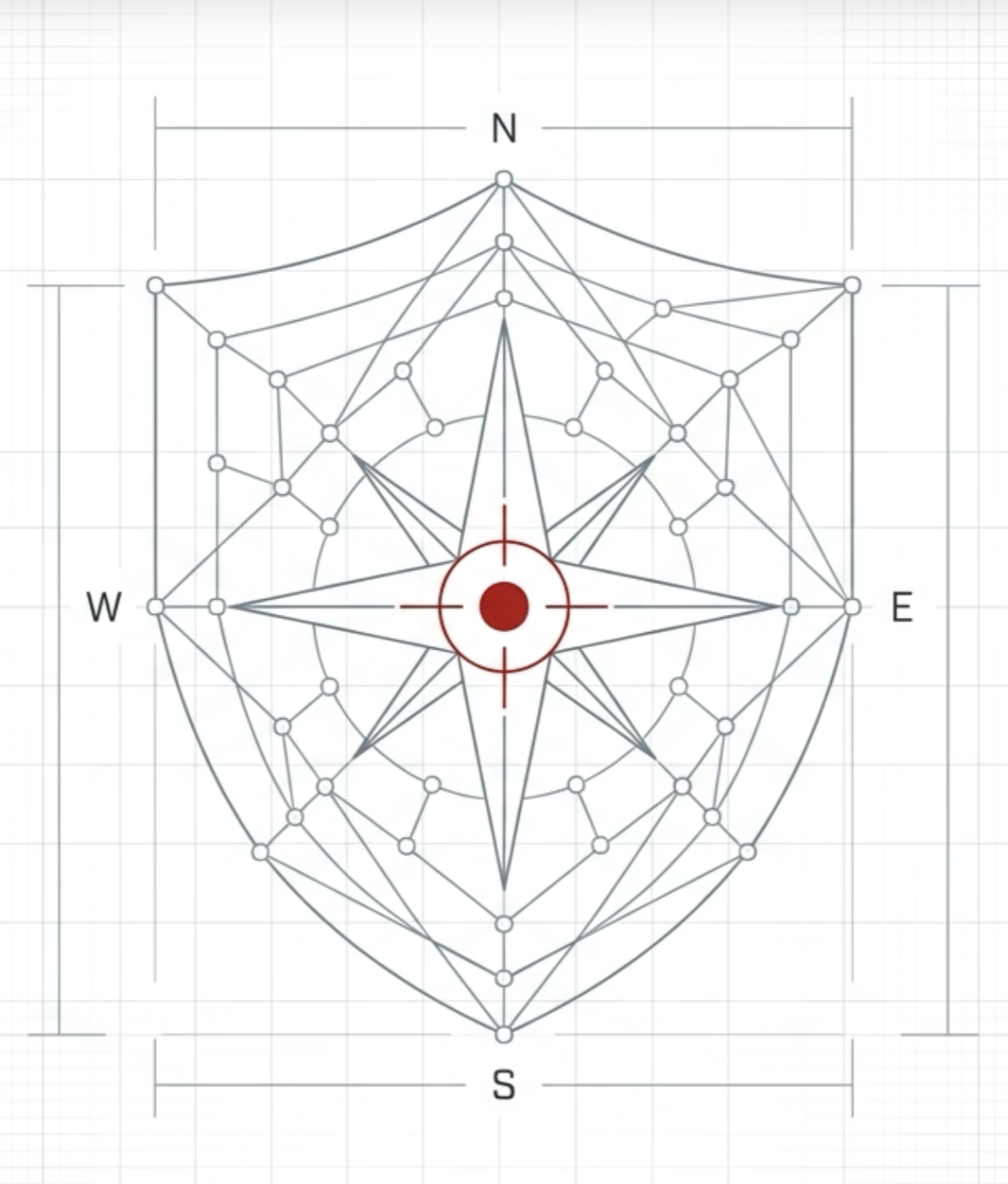
TrueNorth is the productized expression of our Justice Lifecycle Data Architecture — CJIS-aligned interoperability, MPI, and Master Case Packet tooling engineered so state platforms and local agencies finally operate on a single, defensible record.